Home / All / Support / Bearing Puller Sets vs. Individual Pullers: Which Is Better?
Bearing Puller Sets vs. Individual Pullers: Which Is Better?
Update Time:2026/10/10
Direct answer
Choose a bearing puller set when service work varies across sizes, access conditions, and component types. Choose individual pullers when the same job repeats often enough that a dedicated configuration is faster, simpler, and easier to maintain.
Compare the kind of work you actually perform
The best option is determined by the job mix, not by the number of pieces. A fleet workshop or general repair bay benefits from range, while a production-style task may benefit from a single dedicated puller.
List the common shafts, bearings, gears, and hubs you service.
Record the difficult-access jobs that cause delays.
Separate frequent work from occasional one-off removals.
When a puller set is the better choice
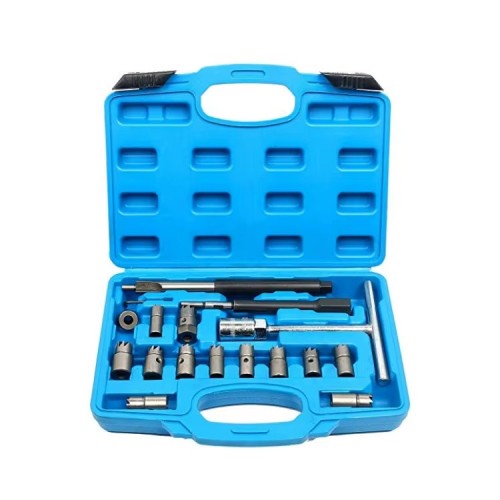
A set gives you several jaw sizes, reach options, separators, yokes, and extensions in one organized system. It reduces the chance that a technician must improvise when the first configuration does not fit.
Useful for mixed automotive, truck, and workshop service.
Useful where several bearing diameters are encountered.
Helpful for training because matched accessories stay together.
A set keeps matching pullers, extensions, and separators available for variable service work.
When an individual puller is the better choice
An individual puller is often preferable when the same geometry appears every day. A dedicated unit can be quicker to position, easier to inspect, and less costly than opening a broad kit for every job.
Useful for a recurring hub, gear, or bearing size.
Useful when capacity or reach requirements are specialized.
Useful as a ready-to-use station tool for frequent work.
Do not trade capacity for kit convenience
A larger kit is not automatically more capable. Confirm the rated force, effective reach, jaw spread, and approved extension arrangement for the exact pull being planned.
Read the rating for the active configuration, not only the case label.
Check the forcing screw and yoke for wear.
Move to a hydraulic system when the application requires it.
A dedicated puller can be the fastest option for a recurring, known geometry.
Consider access and attachment coverage
Sets often win when the workshop needs separators, internal attachments, or extension legs. Individual pullers win when a single jaw profile and center point solve the job without accessory changes.
Include blind-bore and tight-shoulder jobs in the comparison.
Confirm whether a separator is required to reach behind the ring.
Keep essential attachments with the puller they support.
Evaluate storage, inspection, and replacement
A case improves inventory control, but only when every component is returned and inspected. Individual pullers are simpler to track, while sets require a deliberate check-in process after service.
Count and inspect components before closing a kit.
Lubricate threads and protect jaw tips from impact damage.
Replace missing or damaged components with compatible parts only.
Accessory coverage is often the deciding factor between a flexible set and one individual puller.
Use a mixed approach for professional workshops
Many professional operations keep a versatile set for variable work and add dedicated individual pullers for recurring jobs. This combination controls downtime without forcing every task into one tool format.
Build the base kit around common size ranges.
Add dedicated pullers after repeat-job data supports the purchase.
Document the preferred configuration for each recurring repair.
Make the final choice with job data
Compare the expected jobs, capacity, required accessories, storage discipline, and replacement availability. DNT Tools can help map a starter set and individual pullers to a real service workflow.
Prioritize safe engagement over the lowest initial cost.
Avoid partial kits with unknown substitutions.
Review the selection when your repair mix changes.
When to ask for application support
For an unfamiliar fit, limited access, or a high-load removal, share the shaft size, component outside diameter, available reach, and photos with DNT Tools before choosing the puller configuration.