
- Ningbo Dongning Tools Co.,Ltd
- Professional Chinese Tools manufacturer on automotive speciality tools,bearing puller&heavy truck tools
- Address
- No.6 Falan Rd,Hengjie Town,Ningbo City,Zhejiang,China
- Phone
- +86-574-87216625
- info@nbdntools.com

Heat treatment is one of the most critical manufacturing processes in puller production. Whether the tool is a bearing puller, gear puller, hydraulic puller, or bearing separator, its performance depends not only on the steel material used but also on how that steel is heat treated. A properly heat-treated puller delivers higher strength, improved toughness, better wear resistance, and a longer service life. Without proper heat treatment, even high-quality alloy steel can suffer from deformation, premature wear, cracking, or failure under load.
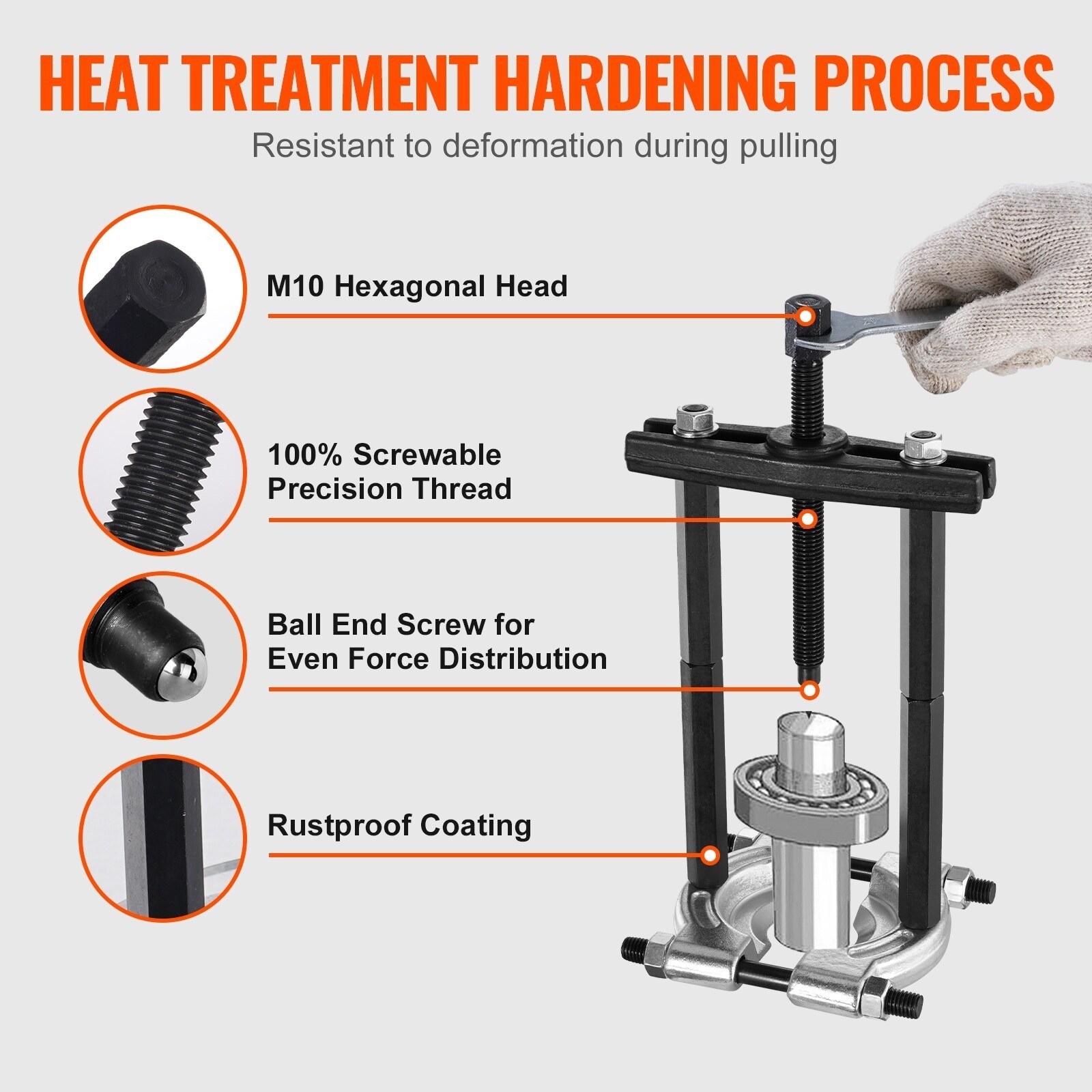
Heat treatment modifies the internal microstructure of steel through controlled heating and cooling cycles. The process allows manufacturers to optimize hardness, strength, toughness, and wear resistance according to the intended application of the puller.
Heat treatment is a controlled metallurgical process that alters the physical and mechanical properties of steel through heating, holding, and cooling cycles. By adjusting temperature, holding time, and cooling rate, manufacturers can significantly improve the performance characteristics of puller components.
During bearing and gear removal, pullers are exposed to extremely high extraction loads. The jaws, forcing screw, and cross beam must withstand significant stress without bending, cracking, or excessive wear. Heat treatment enhances the steel's ability to resist these loads while maintaining long-term reliability.
Professional pullers often operate under several tons of extraction force. Components such as forcing screws and puller jaws require a carefully balanced combination of hardness and toughness to survive repeated loading cycles.
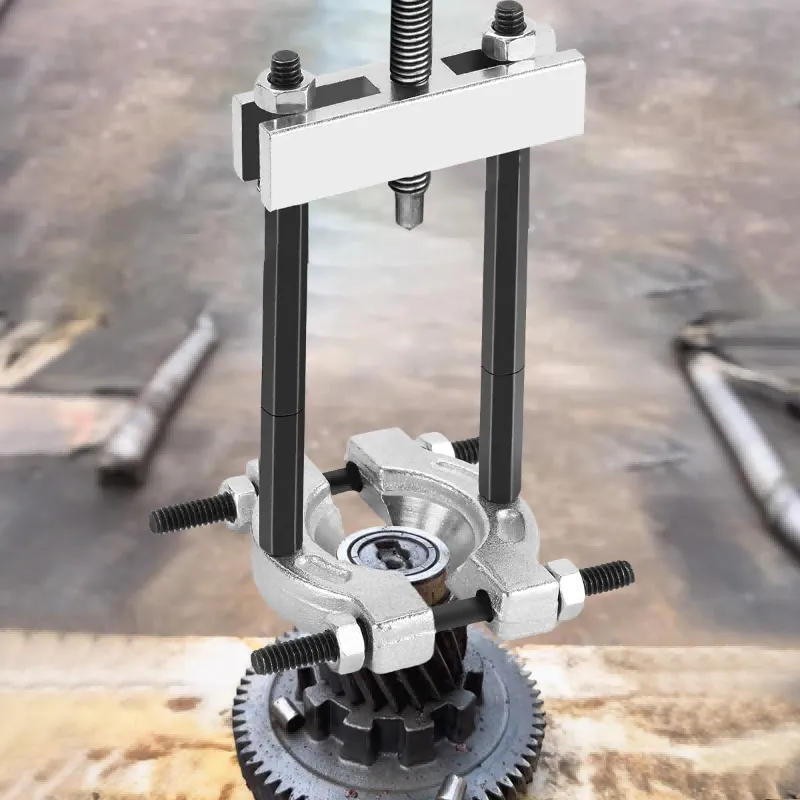
One of the primary benefits of heat treatment is increased strength. Properly quenched and tempered alloy steel can withstand significantly greater extraction forces than untreated steel. This allows pullers to remove larger bearings, gears, and pulleys without permanent deformation.
Hardness alone is not sufficient for professional pullers. Steel that is too hard can become brittle and crack under shock loads. Tempering after hardening improves toughness by reducing brittleness while maintaining adequate strength. This balance is essential for safe and reliable puller operation.
The threads of forcing screws and the gripping surfaces of puller jaws experience continuous friction during use. Heat treatment increases surface hardness and wear resistance, helping these critical components maintain dimensional accuracy and performance over time.
Pullers are subjected to repeated loading and unloading cycles throughout their service life. Proper heat treatment improves fatigue resistance, reducing the likelihood of microscopic cracks developing over time and helping the tool withstand years of professional use.
The most common heat treatment process for professional pullers is quenching followed by tempering. Quenching rapidly cools the heated steel to increase hardness, while tempering reheats the material at a controlled temperature to improve toughness and reduce brittleness.
| Process | Primary Purpose |
|---|---|
| Quenching | Increase hardness and strength |
| Tempering | Increase toughness and reduce brittleness |
| Induction Hardening | Strengthen wear surfaces |
| Normalizing | Refine grain structure |
| Feature | Heat-Treated Puller | Non-Heat-Treated Puller |
|---|---|---|
| Strength | High | Moderate |
| Toughness | Balanced | Often inconsistent |
| Wear Resistance | Excellent | Limited |
| Service Life | Long | Shorter |
| Heavy-Duty Applications | Suitable | Not recommended |
Heat treatment is essential for producing high-quality pullers capable of withstanding demanding extraction tasks. Through processes such as quenching and tempering, manufacturers improve strength, toughness, wear resistance, and fatigue life while reducing the risk of cracking and deformation. For professional bearing pullers, gear pullers, hydraulic pullers, and industrial extraction tools, proper heat treatment is one of the key factors that determines long-term reliability and performance.