
- Ningbo Dongning Tools Co.,Ltd
- Professional Chinese Tools manufacturer on automotive speciality tools,bearing puller&heavy truck tools
- Address
- No.6 Falan Rd,Hengjie Town,Ningbo City,Zhejiang,China
- Phone
- +86-574-87216625
- info@nbdntools.com

Heat treatment is a critical manufacturing process that determines the final performance of bearing pullers, gear pullers, hydraulic pullers, and other industrial extraction tools. It is a controlled thermal process that modifies the internal microstructure of steel, improving hardness, strength, toughness, and wear resistance. Without proper heat treatment, even high-grade alloy steel components may fail under high extraction loads.
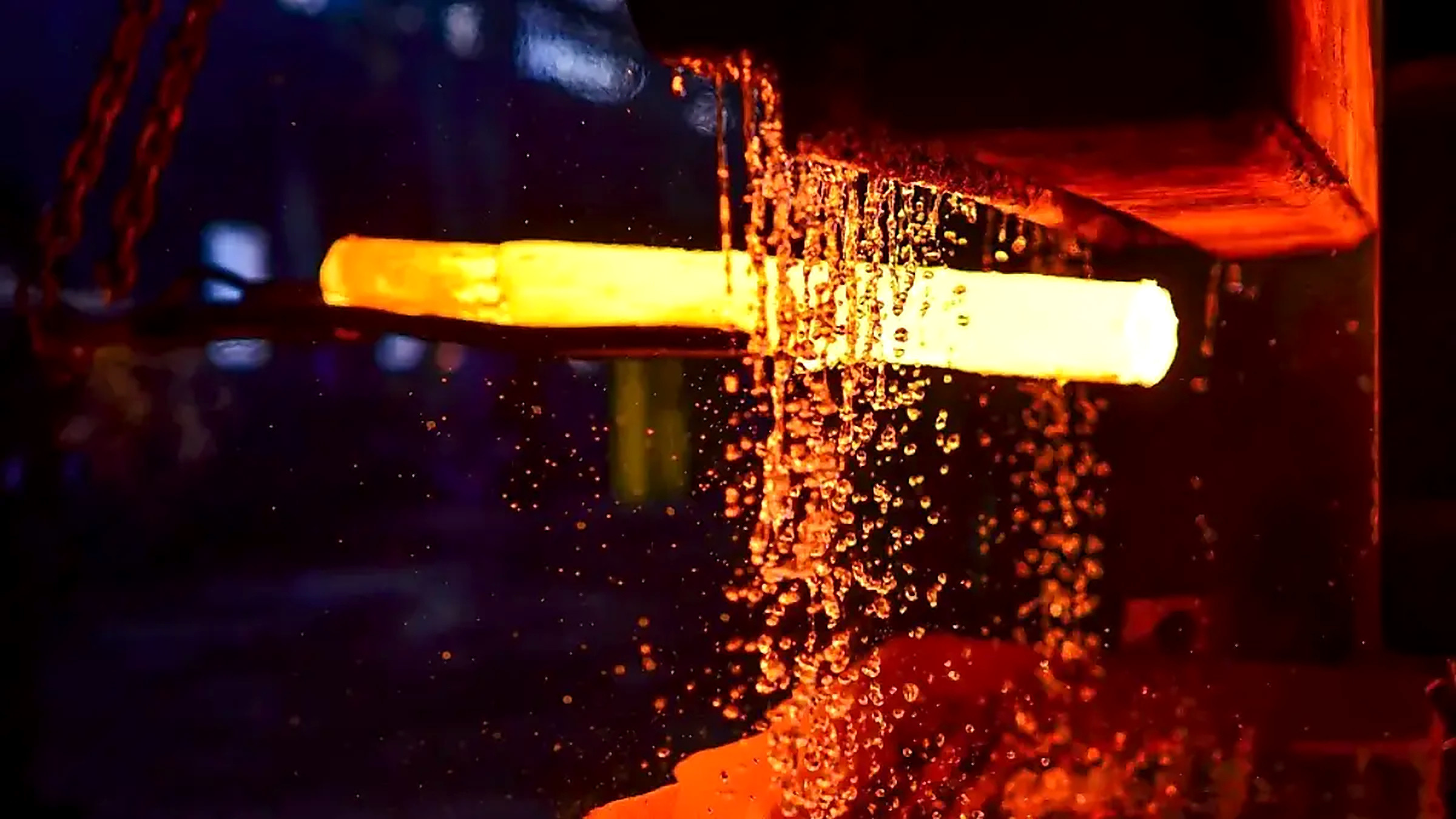
The main goal of heat treatment in puller manufacturing is to optimize mechanical properties so that the tool can withstand repeated high-force extraction without deformation, cracking, or premature wear.
Heat treatment changes the microstructure of steel through controlled heating and cooling cycles. This transforms the arrangement of internal grains, improving performance characteristics such as hardness and toughness. The process allows manufacturers to fine-tune steel behavior for demanding mechanical applications.
During bearing or gear removal, pullers are subjected to extreme axial forces. Components such as jaws, cross beams, and forcing screws must withstand concentrated stress without bending or fracturing. Heat treatment ensures these components maintain structural integrity under repeated heavy-duty use.
Pullers operate under multi-ton loads, especially in heavy truck, industrial, and gearbox maintenance. Proper heat treatment ensures the tool performs safely even when components are seized or corroded.
Quenching rapidly cools heated steel to increase hardness. This process forms a hard martensitic structure, which is essential for components like jaws and screws that require high strength.
Tempering reheats quenched steel at a lower temperature to reduce brittleness while maintaining strength. This balance is critical for preventing cracking during heavy pulling operations.
Induction hardening selectively strengthens surface layers of components such as forcing screws and jaw tips, improving wear resistance where friction is highest.
Normalizing refines grain structure and improves uniformity of mechanical properties, ensuring consistent performance across all puller components.
A key reason heat treatment is essential is to balance hardness and toughness. Excessively hard steel becomes brittle and may crack under shock loads, while untreated steel may deform under pressure. Proper tempering ensures pullers maintain both strength and durability.
| Property | Heat Treated Pullers | Non-Heat Treated Pullers |
|---|---|---|
| Strength | High | Moderate |
| Toughness | Balanced | Inconsistent |
| Wear Resistance | Excellent | Low |
| Service Life | Long | Short |
Heat treatment matters for pullers because it directly determines whether the tool can withstand high mechanical loads, repeated stress cycles, and harsh working environments. Through controlled processes such as quenching, tempering, and surface hardening, manufacturers ensure that pullers achieve the necessary balance of strength, toughness, and wear resistance required for professional automotive and industrial applications.