Home / All / Support / Puller Tool Safety Tips for Heavy Truck Axle Service
Puller Tool Safety Tips for Heavy Truck Axle Service
Update Time:2026/11/16
Puller Tool Safety Tips for Heavy Truck Axle Service: the short answer
For heavy truck axle service, use a puller only when the component, reaction point, jaw engagement, and tool rating are known. Secure and support the vehicle, keep the puller centered, and follow the axle maker's procedure. Stop if the tool shifts, bends, or loads a housing edge.
Secure the truck before touching the axle
Park on a level surface, chock wheels, isolate the vehicle as required, and support it at manufacturer-approved points with rated stands. Never work under a vehicle held only by a jack. Wear eye protection and protective footwear; keep bystanders outside the possible line of movement.
Identify the component and its retention
Confirm whether the target is a bearing, hub, gear, sleeve, or retainer. Check for nuts, clips, locking devices, shoulders, and service-specific steps. A puller cannot safely overcome a fastener or retainer that remains installed.
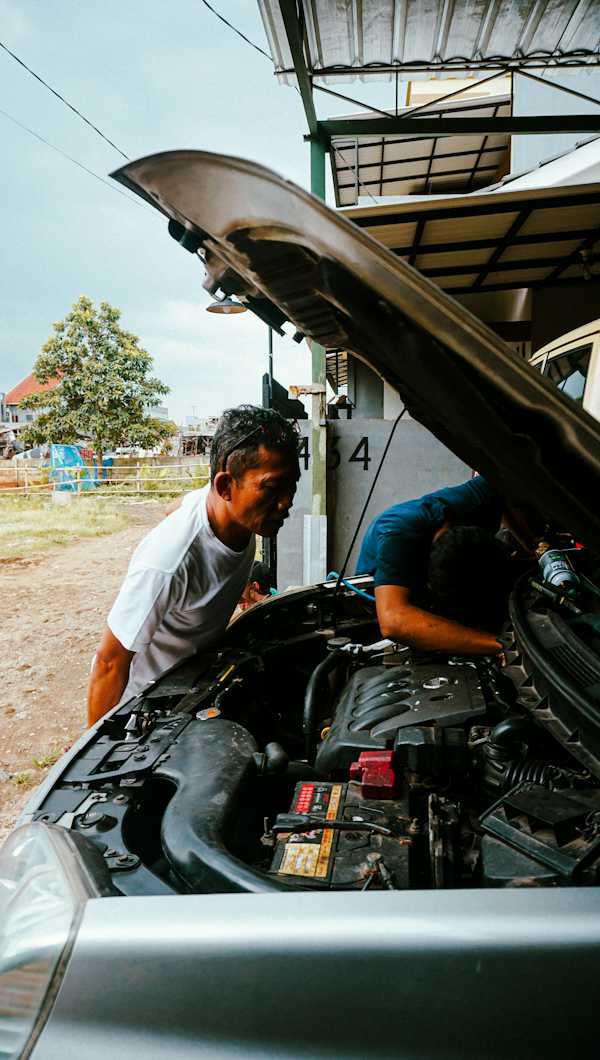
Workshop preparation before heavy axle service. Photo: Unsplash.
Select a puller that fits the job
Compare puller capacity with the manufacturer's service procedure, then check jaw spread and reach independently. Choose jaws, a separator, or a suitable adapter that engages the intended ring rather than a seal, cage, thin housing lip, or unrelated component.
Seat jaws evenly and keep the screw centered
Clean the contact area and place every jaw fully behind the part. Keep the forcing screw on the shaft axis and use a protective point or adapter where specified. Uneven jaw contact can cock the bearing, damage the shaft, or release the tool suddenly.
Apply force gradually and stay out of the line of fire
Load the puller in small, controlled increments. Do not extend a wrench with a pipe, strike a loaded puller, heat the bearing, or mix components beyond the rated configuration. Follow the tool instructions for hydraulic pressure and use only rated hoses and fittings.
Technician working with engine components. Photo: Unsplash.
Stop when the setup moves or the load rises unexpectedly
Pause if a jaw walks, the crosshead tilts, the screw bends, pressure rises without movement, or the housing begins to distort. Release the load using the tool procedure, re-check retention and alignment, and select another method if the procedure calls for a press or dedicated fixture.
Protect the shaft, threads, bearing seat, and hub
Use the specified screw tip or shaft protector. Catch released components so they cannot fall. Do not pry against machined sealing surfaces, and do not reuse parts that are cracked, scored, overheated, or otherwise outside service limits.
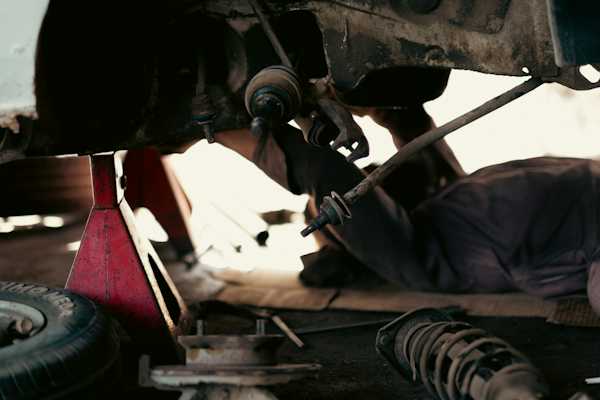
Mechanic under a vehicle supported for service. Photo: Unsplash.
Inspect after removal and document the cause
Clean components using the approved method and inspect the shaft, bearing seat, hub, race, seal area, and fasteners. Record abnormal wear or damage and confirm the replacement and reassembly steps against the exact axle manual.
When to ask for tooling support
If the available access, puller rating, or reaction point is unclear, stop rather than improvise. DNT Tools can review the dimensions and service setup for a suitable puller configuration; the vehicle maker's procedure remains controlling.