Home / All / Support / How to Remove Bearing Races from Wheel Hubs
How to Remove Bearing Races from Wheel Hubs
Update Time:2026/11/6
Remove a bearing race by supporting the hub, engaging the correct race surface, and applying a straight controlled pull or press force.
The method depends on whether the race is pressed on the hub, seated in a bore, or retained by the bearing design. Use a puller or separator that grips the race itself, and replace bearings or seals when the vehicle manufacturer's procedure calls for it.
Identify which race is stuck
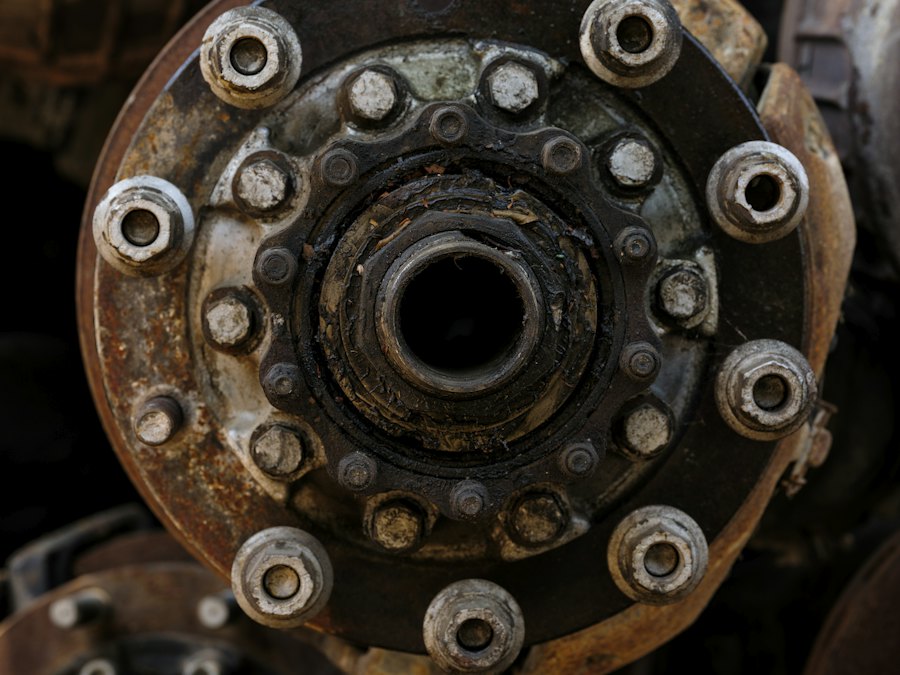
Determine whether the inner race stayed on the hub, an outer race remains in the hub or knuckle bore, or the bearing is a unitized assembly. Each condition needs a different contact point.
Stabilize the hub before force is applied
Secure the hub or knuckle so it cannot roll, tip, or load the puller sideways. Remove retainers and protect nearby sensor rings, studs, or sealing surfaces as the service procedure requires.
Race removal begins by identifying the actual ring and supporting the hub correctly.
Use a separator below a pressed-on race
When the inner race has no shoulder for jaws, fit a bearing separator beneath it. Draw the separator evenly with a puller beam or press arrangement rather than prying against the hub flange.
Use a bore-safe method for an outer race
For a race in a hub or knuckle bore, use the approved extractor, press fixture, or drift points specified for that assembly. Keep the load square to avoid scoring the bore.
Inspect the hub after removal
Clean the seat and check for heat discoloration, grooves, cracks, or a loose fit. Damage at the seat can prevent a replacement bearing from seating correctly.
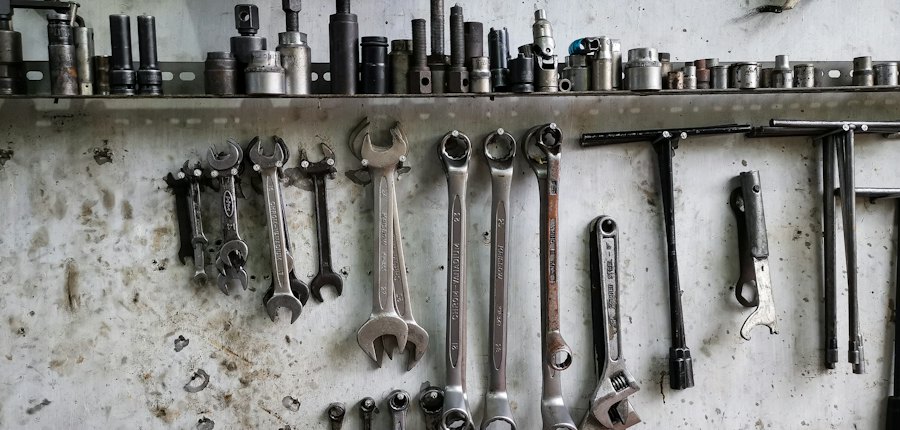
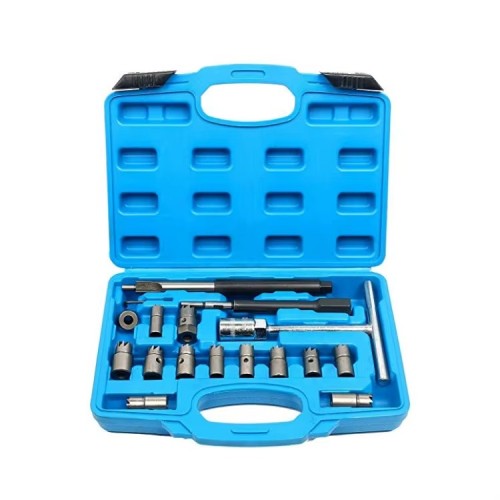
Correct adapters and pullers provide a safer alternative to improvised prying.
Do not pull through the bearing cage
Pulling on rollers or a cage can break the bearing apart while leaving the race in place. Reposition the tool so force travels through the race being removed.
Install with the correct driver
Press only on the ring that has the interference fit.
Do not transfer installation force through rolling elements.
Use new seals, torque values, and adjustment steps specified for the vehicle.
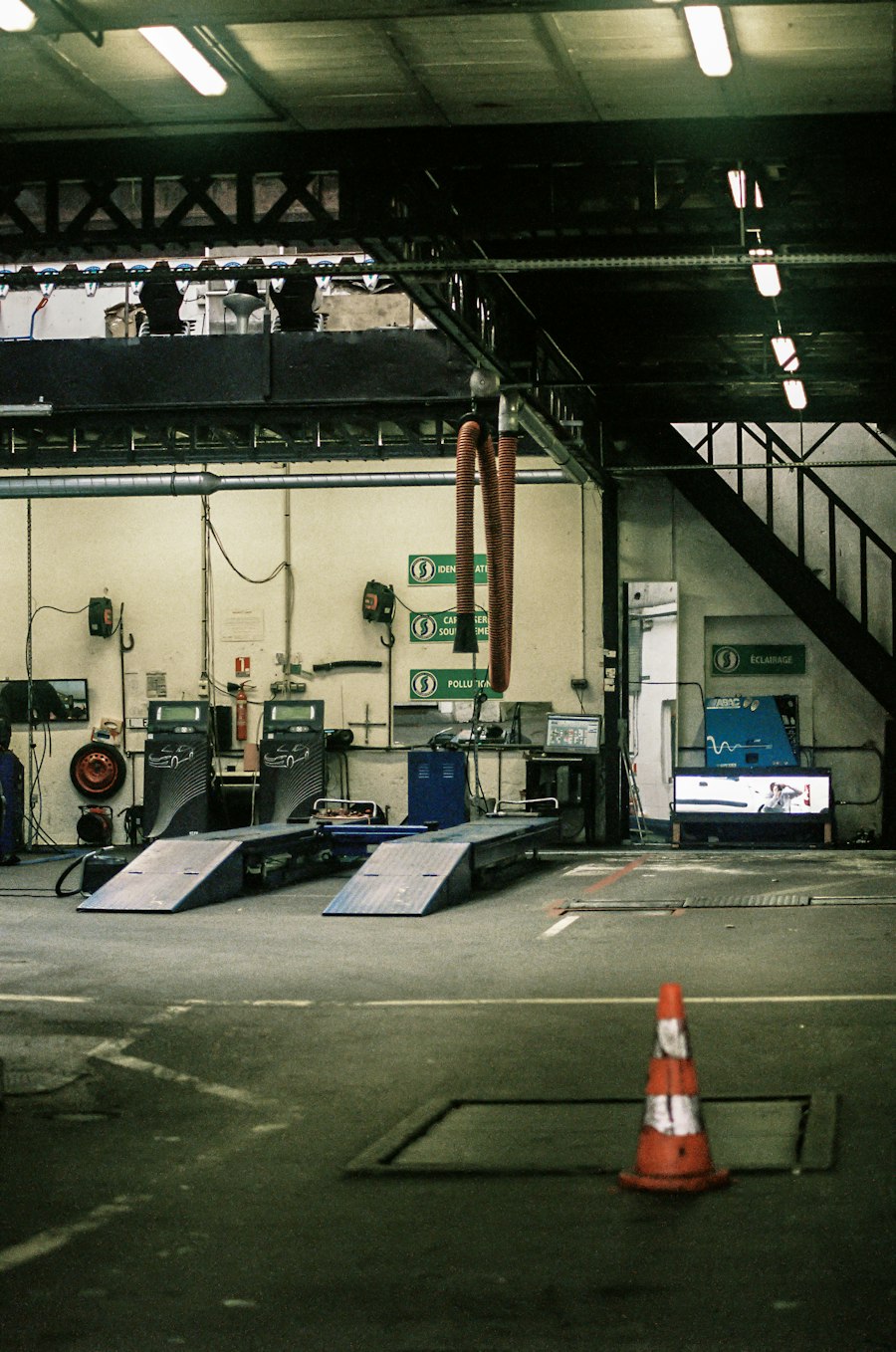
An organized workshop helps protect removed hub components from damage and contamination.