Home / All / Support / Two-Jaw vs. Three-Jaw Bearing Pullers: Which Should You Use?
Two-Jaw vs. Three-Jaw Bearing Pullers: Which Should You Use?
Update Time:2026/9/18
Use a three-jaw puller when clearance allows for balanced, self-centering grip on round parts; choose a two-jaw puller when access or part geometry prevents a third jaw.
Short Answer
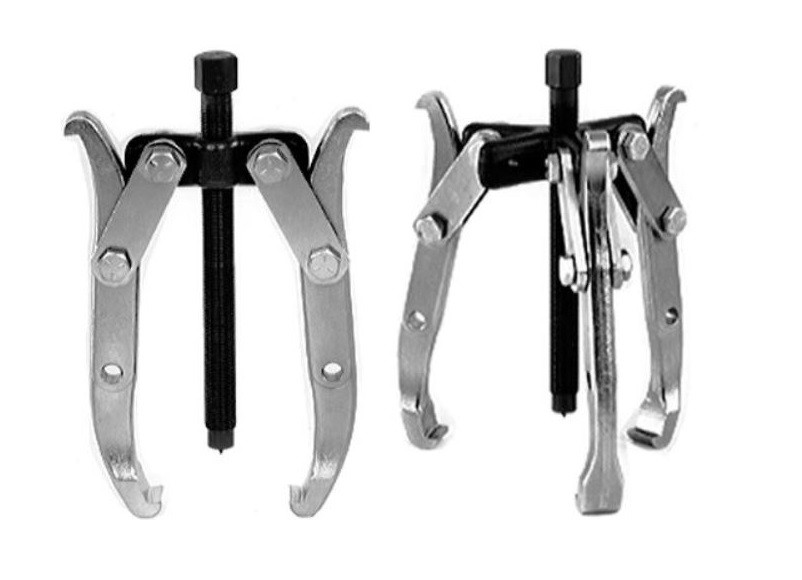
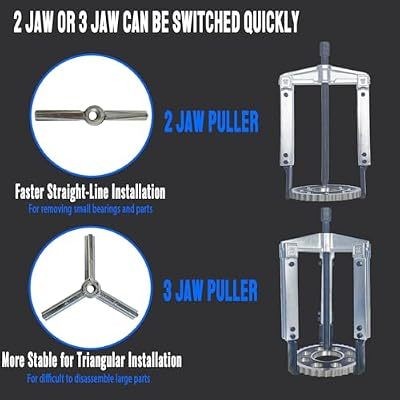
Use a three-jaw bearing puller when the component is round and there is clearance for all three jaws. It gives more even grip and easier centering. Use a two-jaw puller when space, spokes, housings, or the shape of the part prevent a third jaw from seating correctly.
What the Jaw Count Changes
A puller does not become automatically safer simply because it has more jaws. Jaw count changes how load is distributed and how easily the tool centers. The right choice is the arrangement that obtains full, even contact without interference from the surrounding assembly.
What the Jaw Count Changes
Why Three Jaws Are Often Preferred
Three jaws create three contact points around a round bearing, gear, or pulley. This usually improves centering and reduces the tendency for the component to tilt during removal. It is a strong default for open-access work, provided every jaw can sit at the same depth behind a solid edge.
When Two Jaws Are the Correct Answer
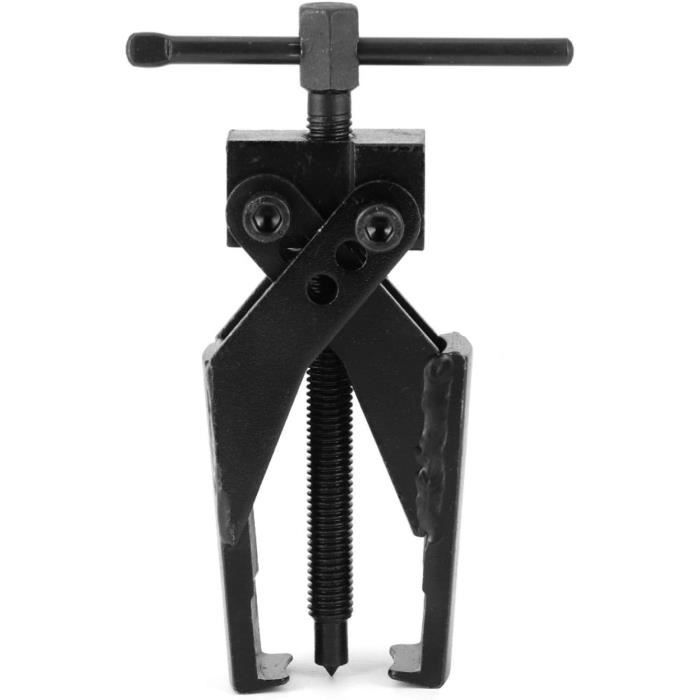
Use two jaws when a housing, bracket, wheel spoke, belt guard, or other obstruction blocks the third position. Two jaws can also be the only practical option where the available puller window is narrow. The tradeoff is that the technician must pay closer attention to centering and equal jaw engagement.
Clearance Matters More Than Preference
Do not force three jaws into a space designed for two. A crowded three-jaw setup may place one jaw shallowly, contact a seal, or sit at a different angle from the others. Conversely, do not use a two-jaw puller in an open circular application just because it is nearby if a properly fitted three-jaw setup is available.
Clearance Matters More Than Preference
Set Each Jaw at the Same Depth
Before force is applied, check that all active jaw feet engage the same bearing ring, gear shoulder, or pulley edge. A jaw that is shallower than the others is likely to slip as load rises. Rotate the assembly by hand where possible and view the puller from multiple angles to confirm it is centered.
Choose Reach and Spread First
Both two- and three-jaw pullers still need the correct reach and spread. Spread must clear the part and allow the jaw feet to close onto the gripping surface. Reach must extend beyond the grip point to the shaft center without forcing the crosshead against adjacent parts.
Use a Separator When Neither Jaw Style Fits
If neither two nor three jaws can get behind the component, use a bearing separator or the correct dedicated attachment. A separator can create a square, controlled pull point for a tight-clearance bearing. Do not hook jaws onto a seal, cage, thin cover, or a part that is not designed to carry extraction load.
Use a Separator When Neither Jaw Style Fits
Stop if the Setup Moves
Stop if any jaw walks outward, the forcing screw leaves the shaft center, the component tilts sharply, or force rises without controlled movement. Release the load, inspect the contact points, and change the setup. Slow, progressive force is safer than repeated shocks or over-tightening an unstable puller.