- Ningbo Dongning Tools Co.,Ltd
- Professional Chinese Tools manufacturer on automotive speciality tools,bearing puller&heavy truck tools
- Address
- No.6 Falan Rd,Hengjie Town,Ningbo City,Zhejiang,China
- Phone
- +86-574-87216625
- info@nbdntools.com

Direct answer: Neither type is always better. A manual puller is often appropriate for accessible bearings with moderate extraction force, while a hydraulic puller is useful for larger or tighter components that need more controlled force. Correct grip and alignment matter more than the power source alone.
Neither type is always better. A manual puller is often appropriate for accessible bearings with moderate extraction force, while a hydraulic puller is useful for larger or tighter components that need more controlled force. Correct grip and alignment matter more than the power source alone.
Manual pullers provide good feel for lighter work, but force can become difficult to apply consistently as fits become tighter. Hydraulic pullers can produce higher force with less operator effort when the assembly is properly rated and supported.
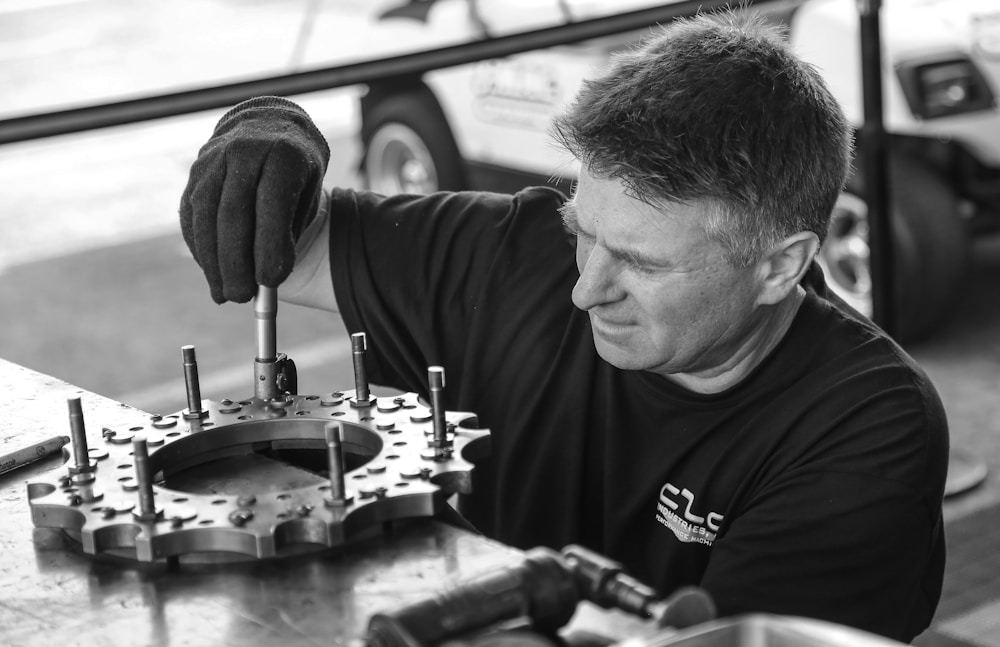
Limited clearance may call for a slim bearing separator, split plate, or a compact manual setup. A hydraulic arrangement needs room for its ram, crosshead, hoses, and a stable reaction path.
Both types must pull on the shaft axis. Manual systems make it easier to feel early resistance, while hydraulic systems require especially careful centering because high force can quickly turn a small misalignment into damage.
Corrosion, fretting, heat discoloration, and a damaged inner ring can raise extraction resistance. Clean the accessible area and identify retaining devices before selecting the tool and applying force.
Hydraulic systems may shorten high-load extraction once installed, but they can take longer to position safely. For occasional small bearing work, a well-maintained manual puller may be faster overall.
For either puller type, use attachments that contact a strong surface behind the bearing. A separator can prevent jaw slip and help distribute the load when there is little space behind the inner ring.
Confirm tool capacity, inspect threads or hoses, support the housing, protect the operator from the loaded path, and stop if the component tilts or the puller starts to slip. Never increase force to overcome an unidentified obstruction.
Choose based on the transmission range, typical bearing size, available workspace, and repair frequency. DNT Tools can help a service team evaluate whether a manual, hydraulic, or combined puller-and-separator setup fits its recurring truck transmission work.
For a puller, separator, or support setup matched to your application, contact DNT Tools with the bearing, shaft, and housing dimensions.