- Ningbo Dongning Tools Co.,Ltd
- Professional Chinese Tools manufacturer on automotive speciality tools,bearing puller&heavy truck tools
- Address
- No.6 Falan Rd,Hengjie Town,Ningbo City,Zhejiang,China
- Phone
- +86-574-87216625
- info@nbdntools.com

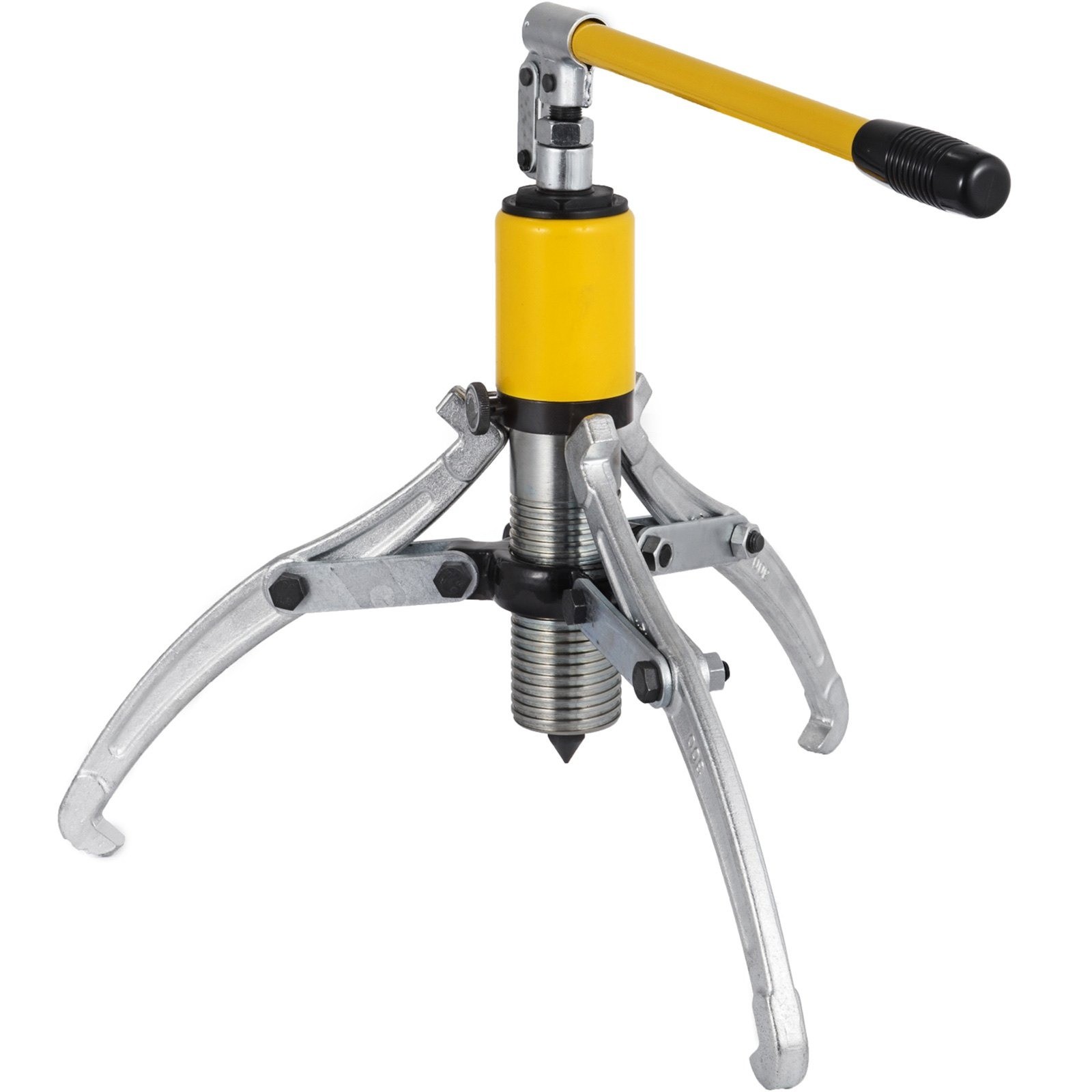
Hydraulic pullers are high-force extraction tools used to remove bearings, gears, pulleys, couplings, bushings, sleeves, wheels, sprockets, and other tightly fitted components from shafts. They are widely used in industrial maintenance because they provide substantially more pulling force than standard mechanical pullers while requiring less physical effort from the operator.
In manufacturing plants, mines, power stations, steel mills, rail facilities, shipyards, and heavy equipment workshops, shaft-mounted components may be exposed to high loads, corrosion, heat cycles, contamination, and years of continuous operation. These conditions can make disassembly extremely difficult. A correctly selected hydraulic puller applies gradual and controlled axial force, helping technicians remove the component without unnecessary hammering, cutting, or uncontrolled heating.
Industrial bearings and rotating components are often mounted using interference fits. The component bore is slightly smaller than the shaft diameter, creating a tight connection that prevents movement during operation. This fit is necessary for reliable machine performance, but it can make removal difficult during maintenance.
Mechanical pullers rely on a threaded forcing screw and operator-applied torque. They work well for many routine jobs, but their practical force capacity may be insufficient for large, corroded, or heavily press-fitted parts. Hydraulic pullers use fluid pressure to generate substantially greater force through a hydraulic cylinder.
Their main industrial advantages include:
High pulling capacity
Lower operator effort
Smooth and progressive force application
Better control during difficult removals
Reduced dependence on hammering or flame cutting
Improved productivity during planned shutdowns
Compatibility with large rotating equipment
Hydraulic force does not eliminate the need for correct setup. The jaws must be securely engaged, the cylinder must be aligned with the shaft centerline, and the puller must have adequate reach, spread, stroke, and rated capacity.
Bearing removal is one of the most common industrial applications for hydraulic pullers. Bearings support shafts in electric motors, pumps, compressors, gearboxes, fans, turbines, conveyors, and processing machinery.
During replacement, the puller should normally apply force to the bearing ring that has the interference fit. Pulling through the wrong ring may transfer force through the rolling elements and damage the bearing or associated components.
Hydraulic pullers are commonly used to remove:
Large ball bearings
Cylindrical roller bearings
Spherical roller bearings
Tapered roller bearings
Bearing inner rings
Bearing housings and cartridges
Large bearing sleeves
Corroded shaft-mounted bearings
When the bearing cannot be gripped externally, technicians may combine hydraulic force with a bearing separator, internal extractor, puller plate, or application-specific fixture.
Electric motors and generators depend on accurately fitted bearings to maintain rotor alignment and smooth operation. During overhaul, worn bearings must be removed without damaging the rotor shaft, bearing seat, fan, or surrounding housing.
Hydraulic pullers are particularly useful for large industrial motors where bearing size and interference are greater than those found in smaller workshop equipment.
Typical applications include:
Drive-end bearing removal
Non-drive-end bearing removal
Rotor coupling extraction
Cooling fan hub removal
Generator bearing service
Shaft sleeve extraction
Pulley and sheave removal
Controlled axial pulling helps protect precision-machined shaft surfaces. It also reduces the risk of rotor distortion caused by repeated hammering or uneven mechanical force.
Pumps and compressors contain bearings, impellers, couplings, sleeves, gears, and seals that may require removal during scheduled maintenance or failure analysis.
In centrifugal pumps, hydraulic pullers may be used to remove shaft bearings, coupling hubs, impellers, or sleeves. In compressors, they may assist with bearing removal, pulley extraction, and gear disassembly.
Common applications include:
Pump bearing extraction
Impeller hub removal
Compressor pulley removal
Shaft coupling disassembly
Mechanical seal sleeve removal
Bearing carrier extraction
Drive gear removal
Technicians must identify which components are threaded, keyed, tapered, or press-fitted before applying force. A hydraulic puller should not be used as a substitute for understanding the assembly design.
Industrial gearboxes use tightly fitted bearings, gears, bearing carriers, couplings, and shaft sleeves. These components may be difficult to remove after long service because of high torque loads, lubricant deposits, corrosion, and repeated heat cycles.
Hydraulic pullers are frequently used during gearbox rebuilding for:
Input shaft bearing removal
Output shaft bearing removal
Gear extraction
Pinion removal
Coupling hub removal
Bearing carrier disassembly
Shaft sleeve extraction
Sprocket removal
Some gears require a bearing separator or custom puller plate because there is insufficient clearance for conventional jaw hooks. Large gearboxes may require high-capacity pullers with extended reach, adjustable jaws, and external hydraulic pumps.
The pulling force must remain aligned with the shaft. Side loading can damage gear teeth, bend shafts, or cause the puller arms to slip.
Couplings connect motors, pumps, compressors, gearboxes, and driven machinery. Their hubs may be installed with straight interference fits, tapered bores, keys, or hydraulic mounting systems.
After years of operation, coupling hubs can become difficult to remove because of fretting corrosion, oxidation, or contamination around the shaft interface. Hydraulic pullers provide controlled force for separating the hub from the shaft.
Typical applications include:
Flexible coupling hubs
Rigid couplings
Gear coupling hubs
Conveyor drive couplings
Pump coupling halves
Fan hubs
Flywheels
Shaft-mounted drive hubs
A puller should engage a structurally strong section of the coupling. Thin flanges, flexible elements, and fragile cast sections should not be used as pulling points unless the manufacturer specifically permits it.
Conveyors are widely used in mining, manufacturing, logistics, cement production, food processing, and bulk material handling. Their drive systems contain bearings, rollers, pulleys, sprockets, gearboxes, and couplings that require periodic replacement.
Hydraulic pullers can be used for:
Conveyor pulley bearing removal
Head and tail pulley service
Sprocket extraction
Gearbox coupling removal
Roller bearing replacement
Drive hub disassembly
Locking collar removal
Large conveyor systems are often critical to production. Faster and more predictable component removal can reduce shutdown time and help maintenance teams return the equipment to service sooner.
Mining equipment operates under severe loads and is exposed to dust, vibration, moisture, impact, and abrasive contamination. Bearings, bushings, gears, pins, and couplings may become heavily seized during service.
High-capacity hydraulic pullers are used on:
Crusher bearings
Conveyor drive systems
Screening equipment
Haul truck transmissions
Excavator components
Large gearboxes
Shaft-mounted pulleys
Bushings and pivot components
Locking collars and sleeves
Mining applications often require pullers with high tonnage, long reach, wide spread, reinforced jaws, and portable mounting systems. Large pullers may be installed on wheeled carts or adjustable lifting frames to improve positioning.
Because stored energy can be substantial, operators must establish an exclusion zone and use suitable guarding or protective blankets where required.
Steel mills use large rollers, gear drives, couplings, bearing assemblies, and material-handling systems. These components operate under high temperature, heavy loading, and continuous production conditions.
Hydraulic pullers may be used during:
Roll bearing replacement
Mill gearbox overhaul
Coupling hub removal
Pinion and gear extraction
Conveyor drive maintenance
Fan and blower repair
Shaft sleeve removal
Straightening and processing line maintenance
In these facilities, maintenance windows may be limited. Hydraulic pullers help technicians generate the required force more efficiently than manual extraction systems, particularly when removing large rotating components.
Rail vehicles and railway maintenance equipment contain large wheels, bearings, gears, traction motor components, and shaft-mounted assemblies.
High-tonnage hydraulic pullers may be used for:
Locomotive wheel removal
Traction motor bearing service
Axle-mounted gear extraction
Coupling removal
Large bearing disassembly
Railway maintenance machinery repair
Rail applications require careful control of alignment and force because wheelsets, axles, and traction components are precision assemblies. Dedicated fixtures and high-capacity pullers are often required rather than general-purpose workshop tools.
Marine equipment is exposed to saltwater, humidity, corrosion, and long operating periods. Bearings, propeller shaft components, couplings, gears, and sleeves may become difficult to dismantle.
Hydraulic pullers are used for:
Propeller shaft bearing removal
Marine gearbox servicing
Pump bearing extraction
Coupling hub removal
Winch and deck machinery maintenance
Thruster component repair
Generator overhaul
Shaft sleeve removal
The tool, hoses, couplers, and pump should be protected from corrosion and inspected regularly. Puller capacity must account for the increased resistance caused by rust and marine deposits.
Power plants use turbines, generators, pumps, fans, compressors, and large auxiliary drive systems. Many of these machines contain bearings and couplings that require controlled removal during scheduled outages.
Applications include:
Generator bearing removal
Turbine accessory servicing
Cooling pump overhaul
Fan and blower maintenance
Coupling hub extraction
Gear drive disassembly
Shaft sleeve removal
The maintenance team must use approved lifting, alignment, and disassembly procedures because large power-generation components may have tight dimensional tolerances and high replacement costs.
Wind turbines contain large bearings, couplings, gears, generator components, and shaft-mounted parts. Repair work may take place in restricted spaces where tool size, weight, and controllability are important.
Hydraulic pullers may assist with:
Generator bearing removal
Gearbox component service
Coupling extraction
Auxiliary motor repair
Brake component disassembly
Shaft-mounted hub removal
Tool selection must account for access limitations inside the nacelle. Compact hydraulic pullers and modular puller systems can provide high force without requiring the physical space needed for very large manual tools.
Agricultural and construction machines use large bearings, gears, pulleys, bushings, and hubs in transmissions, axles, hydraulic systems, and working attachments.
Common applications include:
Tractor axle bearings
Harvester gearbox bearings
Excavator drive components
Loader hub assemblies
Dozer transmission gears
Crane pulley systems
Agricultural implement bearings
Pivot bushings and sleeves
Hydraulic pullers are useful when equipment has been exposed to mud, dust, moisture, fertilizer, and long-term outdoor storage. These conditions often increase corrosion and removal resistance.
Belt and chain drive systems use pulleys, sheaves, and sprockets mounted on keyed or interference-fit shafts. Uneven removal can damage the shaft, keyway, or component.
Hydraulic pullers provide controlled extraction for:
V-belt pulleys
Multi-groove sheaves
Timing pulleys
Conveyor sprockets
Chain drive gears
Fan pulleys
Pump drive pulleys
The jaws should engage near the hub rather than the outer rim whenever possible. Pulling on a thin pulley edge can deform the component or cause it to fracture.
Some hydraulic puller systems can be configured with push-puller attachments, threaded adapters, or dedicated fixtures for removing pins and bushings.
Industrial applications include:
Pivot pin removal
Press-fit bushing extraction
Construction machinery joints
Plant equipment linkages
Track and undercarriage components
Crane and lifting equipment pivots
Pins exposed to corrosion, impact, and heavy loading may require significant extraction force. Dedicated pin pullers or hydraulic cylinders should be used when standard jaw pullers cannot obtain a safe grip.
Production machinery contains bearings, gears, couplings, pulleys, and bushings that must be serviced while minimizing downtime.
Hydraulic pullers can support maintenance of:
Injection molding machines
Packaging equipment
Printing machinery
Textile machinery
Machine tools
Press lines
Automated production systems
Portable hydraulic pullers allow maintenance technicians to perform controlled disassembly directly on the installed machine, reducing the need to move large assemblies to a workshop press.
When a component is seized, technicians may be tempted to use hammers, chisels, grinders, or cutting torches. These methods may create additional risks.
Hammering can:
Damage bearing seats
Bend shafts
Crack housings
Distort gears and pulleys
Transfer impact into nearby bearings
Cause uncontrolled component release
Cutting and heating can:
Damage the shaft surface
Affect heat-treated components
Ignite grease or contaminants
Damage seals and nearby electronics
Create additional finishing work
A hydraulic puller applies controlled axial force and allows the component to be removed with less collateral damage when correctly selected and positioned.
The puller should be selected according to the component, machine layout, and expected extraction load.
The rated capacity must exceed the anticipated force required for removal. Operators should never exceed the manufacturer’s pressure or tonnage rating.
Spread is the opening distance between the jaws. The puller must open wide enough to fit around the component while maintaining secure jaw engagement.
Reach is the distance from the puller head to the jaw gripping surface. Sufficient reach is necessary for components positioned deep on a shaft.
The hydraulic cylinder must provide enough movement to release the interference fit. Extensions may be needed for longer extractions, but only approved accessories should be used.
Three-jaw pullers generally provide more balanced force distribution and better centering. Two-jaw configurations are useful where access is restricted.
External jaws grip behind a shaft-mounted component. Internal pullers or expanding collets are used for components installed inside housings or blind bores.
Synchronized jaws simplify setup and help maintain alignment. Locking systems reduce the risk of the jaws opening or slipping as force increases.
Depending on the job and worksite, hydraulic pullers may use:
Integrated hand pumps
Separate manual pumps
Air-powered hydraulic pumps
Electric hydraulic pumps
The selected pump must be compatible with the cylinder pressure rating and required operating speed.
Hydraulic pullers can store and release substantial energy. Safe operation requires more than simply choosing a high-capacity tool.
Important practices include:
Inspect the jaws, arms, cylinder, hoses, and couplers before use
Confirm that all components have compatible pressure ratings
Keep the puller aligned with the shaft centerline
Position each jaw at the same depth
Use a secure and structurally sound gripping surface
Apply pressure gradually
Do not stand in the component’s release path
Establish an exclusion zone for high-force work
Release hydraulic pressure before adjusting the puller
Stop immediately if a jaw slips or an arm bends
Follow the machinery manufacturer’s disassembly procedure
A higher-capacity puller should never be used to compensate for incorrect jaw positioning or an unsuitable pulling point.
| Selection Factor | Mechanical Puller | Hydraulic Puller |
|---|---|---|
| Force source | Manual forcing screw | Hydraulic pressure |
| Practical capacity | Low to medium | Medium to very high |
| Operator effort | Higher | Lower |
| Portability | Generally higher | Depends on pump and configuration |
| Setup complexity | Lower | Moderate |
| Best use | Routine accessible components | Large, seized, or heavily fitted components |
| Force application | Controlled manually | Smooth and progressive |
| Initial investment | Lower | Higher |
Industrial maintenance teams commonly use both types. Mechanical pullers handle smaller routine jobs, while hydraulic systems are reserved for components requiring greater force or more controlled extraction.
Hydraulic pullers can remove bearings, gears, pulleys, sprockets, coupling hubs, sleeves, wheels, bushings, and other shaft-mounted components when the puller has suitable jaws, reach, spread, and capacity.
They are commonly used in manufacturing, mining, steel production, rail maintenance, marine engineering, power generation, oil and gas operations, construction equipment service, and heavy machinery maintenance.
The required capacity depends on the component diameter, interference fit, corrosion level, shaft design, and gripping arrangement. Capacity should be selected based on the application rather than the physical size of the puller alone.
Three-jaw pullers usually provide more balanced force distribution and better centering. Two-jaw pullers remain useful where surrounding structures prevent three-jaw access.
A conventional external jaw puller cannot. Internal bearings require expanding collets, internal jaws, a bridge puller, or another compatible internal extraction system.
Yes, if they are misaligned, overloaded, or positioned incorrectly. A suitable center tip, shaft protector, and correct axial alignment help reduce the risk of shaft damage.
Industrial hydraulic pullers are used to remove large or tightly fitted bearings, gears, pulleys, couplings, sprockets, sleeves, bushings, wheels, and other rotating equipment components. Their applications extend across electric motors, pumps, compressors, gearboxes, conveyors, mining machinery, steel mills, rail equipment, ships, power plants, wind turbines, and heavy construction machinery.
Their primary advantage is the ability to generate high, controlled extraction force with relatively low operator effort. However, safe and effective use depends on correct selection of capacity, reach, spread, stroke, jaw configuration, pulling point, and hydraulic power source.
When correctly applied, hydraulic pullers reduce disassembly time, limit damage to valuable components, and improve maintenance efficiency across demanding industrial environments.