Home / All / Support / Hydraulic Pullers for Seized Bearings: When and How to Use Them
Hydraulic Pullers for Seized Bearings: When and How to Use Them
Update Time:2026/11/24
Hydraulic Pullers for Seized Bearings: When and How to Use Them
A hydraulic puller is appropriate when the bearing fit and size demand more controlled force than a suitable mechanical puller can provide, and the component has a sound gripping surface. Confirm all retainers are removed, match puller capacity, reach, and spread to the job, align the jaws, then increase pressure gradually while monitoring the gauge. Stop at any movement of the setup or unexpected pressure rise.
When does a seized bearing justify hydraulic force?
Interference fits, corrosion, and large bearing sizes can make dismounting difficult. SKF describes hydraulic tools for medium and large bearings, but the correct method still depends on bearing type, fit, shaft geometry, and the equipment maker's procedure. Hydraulic force is not a remedy for a lock ring or fastener left in place.
Check for hidden retainers and the correct load path
Identify the ring or adjacent component that can safely carry extraction load. Remove retaining hardware first and protect threads and sealing surfaces. If only the cage, seal, or a thin housing edge is accessible, use a specified separator, press fixture, or another approved method rather than forcing puller jaws into an unsafe position.
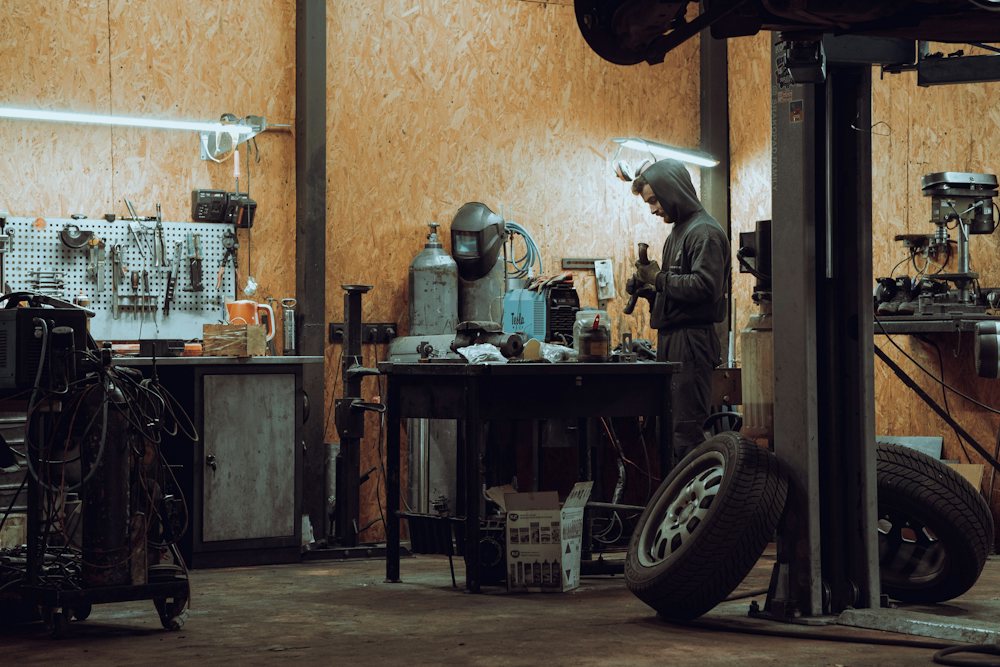
Workshop service setting. Photo: Unsplash. Illustrative scene, not a hydraulic-puller instruction.
Size capacity, reach, and spread separately
Capacity describes the rated pulling force; reach is the jaw depth; spread is the opening around the part. All three must suit the actual component. Verify the rating of the complete configuration, including jaws, adapters, pump, hose, and couplers. A high-capacity cylinder does not compensate for insufficient jaw engagement.
Inspect the puller and hydraulic circuit
Check jaws, crosshead, spindle, hoses, fittings, and gauge for damage. Use only compatible rated parts and follow the puller manufacturer's maintenance instructions. Never repair a puller with substitute bolts or mix components outside their rated combination. Keep the work area and component supported independently of the puller.
Center the puller and seat every jaw
Place each jaw fully on the intended ring or adjacent shoulder, keep them evenly spaced, and align the cylinder or spindle with the shaft axis. Use a shaft protector when specified. Apply only enough initial load to confirm the jaws remain seated and the component starts moving squarely.
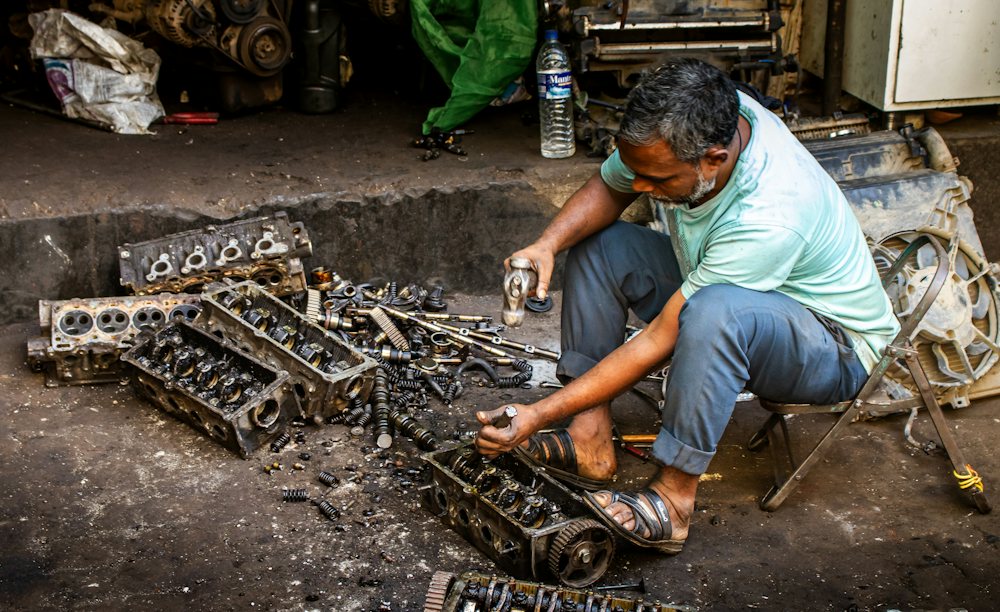
Component inspection setting. Photo: Unsplash. Illustrative parts view.
Increase pressure gradually and watch the gauge
Stand to the side, outside the likely release path. Pump slowly and monitor pressure against the lowest rated element of the setup. A bearing may break free suddenly; keep hands and bystanders clear. Do not strike a loaded puller, add heat to it, or continue past the rated pressure.
What if pressure rises but the bearing does not move?
Stop and release pressure according to the tool manual. Re-check retainers, puller centering, jaw purchase, corrosion, and whether the component must be supported differently. A press, oil-injection arrangement, or maker-specific fixture may be required. Do not treat rising pressure as permission to keep pumping.
After removal, inspect the bearing seat
Catch the released bearing, then inspect the shaft, housing, ring seats, shoulders, and threads. Record corrosion, fretting, scoring, or deformation and investigate why the bearing seized before installing a replacement. Follow the equipment maker's limits for reuse and the specified mounting process.
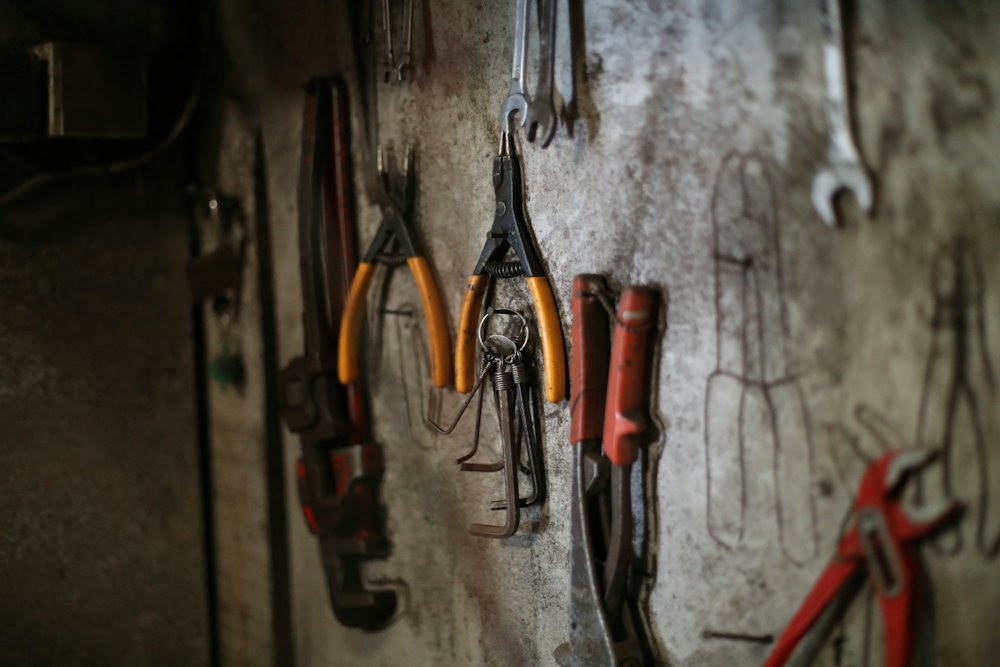
Tool-preparation setting. Photo: Unsplash. Select rated puller components for the actual job.
When should you ask for a different puller configuration?
If jaw access, reach, or reaction points remain uncertain, stop before loading the tool. DNT Tools can review dimensions and available clearance for a suitable configuration, while the bearing and equipment manufacturers' procedures govern removal and replacement.