- Ningbo Dongning Tools Co.,Ltd
- Professional Chinese Tools manufacturer on automotive speciality tools,bearing puller&heavy truck tools
- Address
- No.6 Falan Rd,Hengjie Town,Ningbo City,Zhejiang,China
- Phone
- +86-574-87216625
- info@nbdntools.com

Heavy equipment maintenance requires powerful and reliable pullers because components are larger, heavier, and more tightly fitted than those found in ordinary automotive repair. Bearings, gears, pulleys, sprockets, sleeves, couplings, wheels, bushings, and hydraulic components may all require controlled extraction during service. In construction, mining, agriculture, rail, marine, and industrial maintenance, the correct puller helps technicians remove components safely without damaging shafts, housings, or precision-machined surfaces.
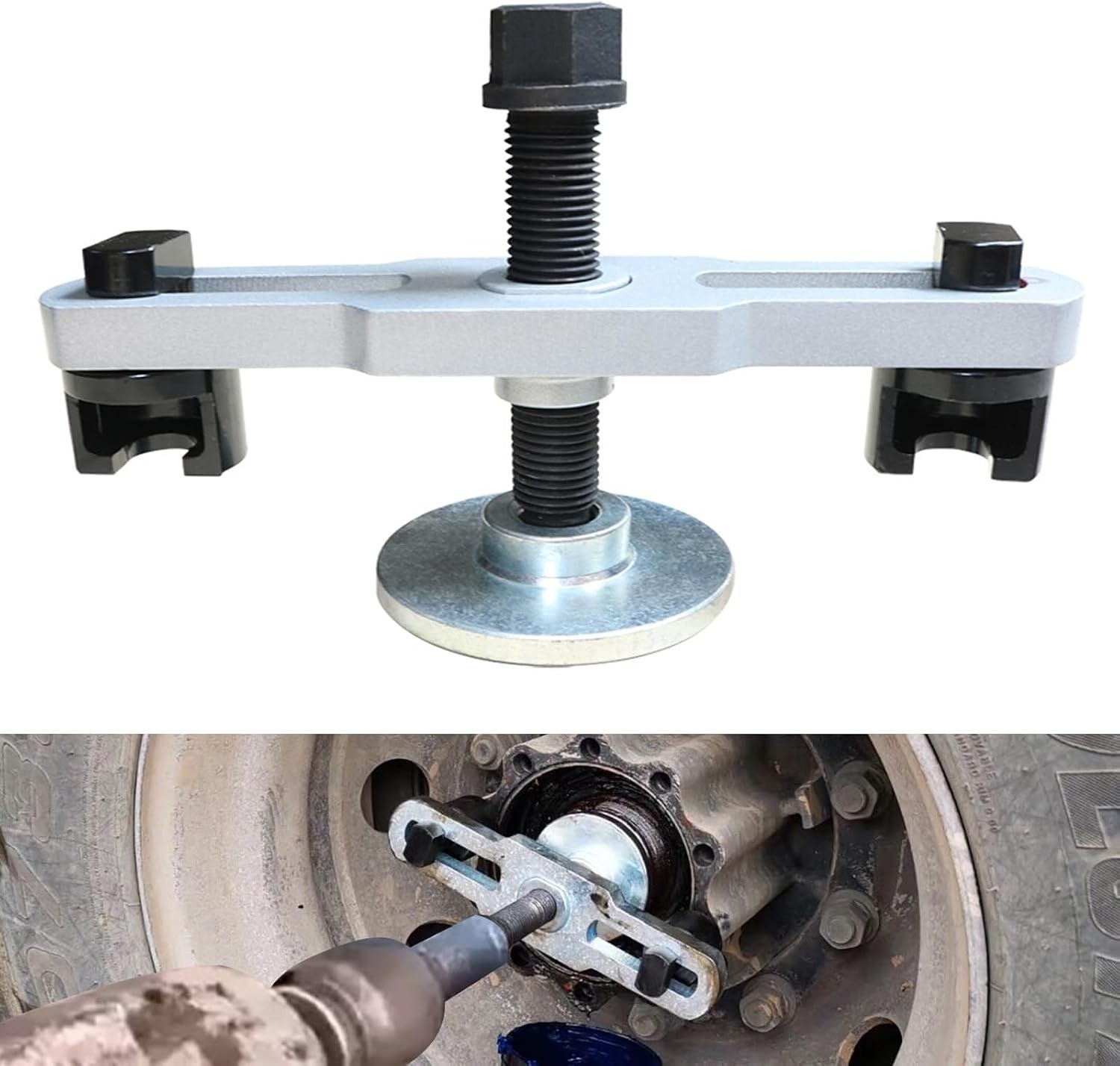
Heavy equipment operates under high loads, shock, vibration, contamination, heat cycles, and outdoor exposure. Bearings and shaft-mounted parts can become seized due to corrosion, fretting, lubricant breakdown, dust, water, and long service life. A standard light-duty puller may not provide enough force or stability for these conditions.
Mechanical jaw pullers are commonly used for general heavy equipment maintenance when the component is accessible and the required force is within the tool’s rated capacity. These tools use two or three jaws that grip behind the component while a central forcing screw pushes against the shaft.
Hydraulic pullers are among the most important tools for heavy equipment maintenance. They use hydraulic pressure to generate high extraction force with less operator effort than mechanical screw pullers. This makes them suitable for large, seized, or heavily press-fitted components.
Large mining machines, rail equipment, crushers, rolling mills, and industrial gearboxes may require high-tonnage hydraulic pullers. These pullers are designed for extreme extraction loads and may include reinforced frames, multiple jaw configurations, long-reach arms, and external hydraulic pumps.
Bearing separators, also called bearing splitters, are used when there is insufficient clearance for standard puller jaws. They consist of two tapered halves that clamp behind a bearing, gear, or race. Once installed, the separator provides a secure pulling surface for a mechanical or hydraulic puller.
Internal bearing pullers are used when bearings are installed inside housings or blind areas where external jaws cannot reach. These tools use expanding collets or internal jaws to grip the bearing from inside the bore.
Push-puller sets are versatile puller systems used for pressing, pulling, and separating components. They typically include a crossbar, forcing screw, threaded rods, adapters, and bearing separator attachments.
Slide hammer pullers generate impact extraction force. They are used when the component can be gripped internally or externally but there is no convenient surface for a standard forcing screw setup.
Some heavy equipment bearings are mounted on tapered seats, adapter sleeves, or withdrawal sleeves. In these cases, hydraulic nuts and hydraulic-assisted dismounting tools may be used to apply controlled axial force for mounting or removal.
Couplings connect motors, pumps, compressors, gearboxes, and driven machinery. In heavy equipment, coupling hubs may be installed with interference fits or keys. Over time, fretting corrosion can make removal difficult.
Construction machinery such as excavators, loaders, bulldozers, cranes, graders, and compactors use many press-fit parts that may require pullers during maintenance.
Mining equipment maintenance requires high-capacity tools because machinery operates under extreme load, contamination, vibration, and shock. Reliable pullers help maintenance teams complete planned shutdown tasks more efficiently and reduce the risk of damaging expensive components.
Agricultural equipment operates in dusty, wet, and corrosive environments. Soil, fertilizer, moisture, and seasonal storage can cause corrosion around bearings and shafts.
Rail and marine equipment require specialized high-force pullers because components can be large, tightly fitted, and exposed to harsh operating conditions.
Tool selection should be based on the component, access condition, and required extraction force. A high-capacity tool should not be used to compensate for poor setup or weak gripping points.
| Selection Factor | Why It Matters |
|---|---|
| Pulling Capacity | The puller must be rated higher than the expected extraction load. |
| Reach | Determines how far the jaws can extend from the puller head to the component. |
| Spread | Determines the maximum diameter the jaws can grip. |
| Jaw Type | External jaws, internal jaws, narrow jaws, long-reach jaws, and locking jaws serve different applications. |
| Force Method | Mechanical pullers are suitable for routine work, while hydraulic pullers are better for high-force or seized components. |
| Access Clearance | Limited clearance may require a bearing separator, splitter, or custom fixture. |
| Factor | Mechanical Puller | Hydraulic Puller |
|---|---|---|
| Force Source | Manual forcing screw | Hydraulic pressure |
| Pulling Capacity | Low to medium | Medium to very high |
| Operator Effort | Higher | Lower |
| Best Use | Accessible routine components | Large, seized, or heavily fitted components |
| Force Control | Gradual manual adjustment | Smooth hydraulic force application |
Heavy equipment puller failures often result from poor setup rather than insufficient tool size. Technicians should confirm tool condition, contact surface, alignment, and rated capacity before applying force.
Correct puller selection improves maintenance quality, protects expensive components, and reduces the need for unsafe removal methods such as hammering, cutting, or uncontrolled heating.
Common pullers include mechanical jaw pullers, hydraulic pullers, bearing separators, internal bearing pullers, push-puller sets, slide hammer pullers, coupling pullers, hydraulic nuts, and application-specific fixtures.
A hydraulic puller should be used when a component is large, seized, heavily press-fitted, or requires more force than a mechanical puller can safely provide.
A jaw puller grips behind a component using hooks. A bearing separator uses two tapered halves to create a pulling surface when there is little clearance behind the bearing or gear.
No. Heavy equipment includes many different shaft sizes, bearing types, access conditions, and force requirements. Professional workshops usually require multiple puller types and adapters.
Poor alignment creates side loading, increases the risk of tool slippage, damages shafts, and may cause the component to bind during removal.
Pullers used in heavy equipment maintenance include mechanical jaw pullers, hydraulic pullers, high-tonnage pullers, bearing separators, internal pullers, slide hammers, push-puller sets, hydraulic nuts, coupling pullers, and application-specific fixtures. These tools are used to remove bearings, gears, pulleys, sprockets, sleeves, wheels, bushings, couplings, and other press-fit components from construction, mining, agricultural, rail, marine, and industrial machinery.
The correct puller improves disassembly efficiency, protects expensive components, and reduces the risk of unsafe removal methods. In heavy equipment maintenance, tool selection should always consider pulling capacity, reach, spread, access clearance, gripping method, alignment, and the value of the component being serviced.