
- Ningbo Dongning Tools Co.,Ltd
- Professional Chinese Tools manufacturer on automotive speciality tools,bearing puller&heavy truck tools
- Address
- No.6 Falan Rd,Hengjie Town,Ningbo City,Zhejiang,China
- Phone
- +86-574-87216625
- info@nbdntools.com

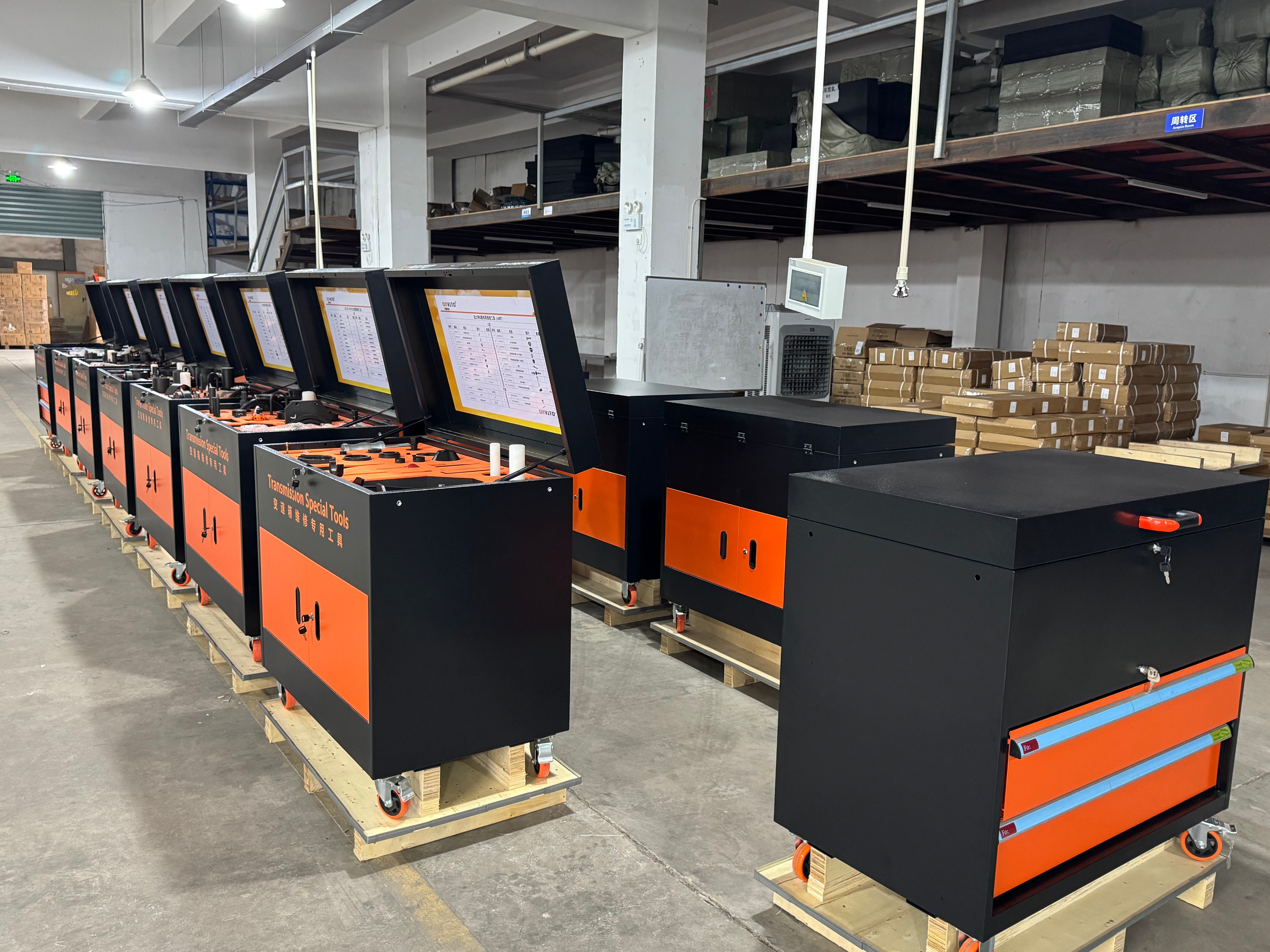
Rebuilding a manual transmission is one of the most challenging yet rewarding automotive repair projects. Whether you’re tackling a 5-speed gearbox at home or preparing tools for professional workshop use, having the right set of tools is crucial to get the job done correctly and safely. A comprehensive list that includes both basic and specialized tools can mean the difference between a smooth rebuild and costly mistakes.
In this article, we break down the essential tools you need for a successful manual transmission rebuild — from general hand tools to precision devices and specialty fixtures — so you can work efficiently with confidence.
Manual transmissions consist of multiple gears, bearings, synchronizers, shafts, snap rings, and seals. Disassembling and reassembling these intricate parts requires tools specifically designed for transmission service. Using improvised or incorrect tools can damage delicate components, create alignment issues, or make reassembly difficult.
A well-prepared tool list also helps you plan the workflow, minimize downtime, and ensure you complete the rebuild with professional results.
Before diving into specialized tools, you need a solid foundation of basic equipment:
Socket & Wrench Set: A comprehensive collection of metric and SAE sockets and wrenches ensures you can remove housing bolts, shift forks, and related fasteners.
Torque Wrench: Critical for tightening bolts to manufacturer specifications during reassembly, avoiding over-tightening and part distortion.
Extensions & Breaker Bars: These help reach concealed fasteners and apply leverage for stubborn bolts.
Screwdrivers and Pry Bars: Various sizes support removal of covers, clips, and smaller components.
These basic tools are indispensable for any teardown and rebuild operation.
Manual transmission rebuilds often require tools beyond general hand tools. The following specialized tools make it possible to work on internal components without damage:
A dedicated transmission jack supports lifting and lowering the transmission gearbox safely and accurately, especially when it’s still installed or being maneuvered into repair position.
Bearings are press-fit onto shafts and housings. A bearing puller or splitter tool allows you to remove these tight-fitting components without damage.
Manual boxes use many snap rings to hold gears, bearings, and spacers in place. Snap ring pliers let you safely remove and install these retaining rings.
Old seals often adhere tightly to housings. A seal puller removes them without scoring the shaft or bore.
Precision is key to a successful transmission rebuild. These tools help verify tolerances and align components correctly:
Dial Indicator with Magnetic Base: Checks end play on shafts and ensures correct gear alignment.
Feeler Gauges: Measures clearances between gears and synchronizer rings.
Calipers: For measuring shaft diameters, gear widths, and bearing dimensions.
These measurement tools help avoid rework and ensure parts fit precisely.
Having a functional work area and support tools ensures a smoother rebuild process:
A sturdy bench vise is useful for holding shafts or housings steady during bearing removal or installation.
Many internal fittings like gears, bearings, and bushings require a press. A bench press or full shop press applies controlled force without damage.
Organize disassembled parts in labeled bins. This reduces confusion during reassembly.
For more advanced rebuilds or professional environments, the following tools add efficiency and accuracy:
Transmission Holding Fixtures to stabilize the case during disassembly or assembly.
Gear Pullers of Various Sizes for hard-to-reach gears.
Gasket Maker & RTV Sealant Tools for sealing transmission cases.
While not strictly required in every rebuild, these tools speed up work and reduce the risk of damage.
In addition to tools, a service manual specific to the transmission model is invaluable. It provides torque specs, assembly order, and clearance requirements that generic guides cannot substitute.